Skip to Content
Product galleryChoose a photo for details

Technical specifications

UseColouring silicone throughout the material
Systems listed in the data sheetAddition-cure and condensation-cure silicones

Specificatii

Manufacturer Zhermack
HELP FOR YOUR PROJECT

Ask a specialist

Tell us what you want to make, and we will help you choose the right material.

Talk to a specialist
Silicone auxiliaries

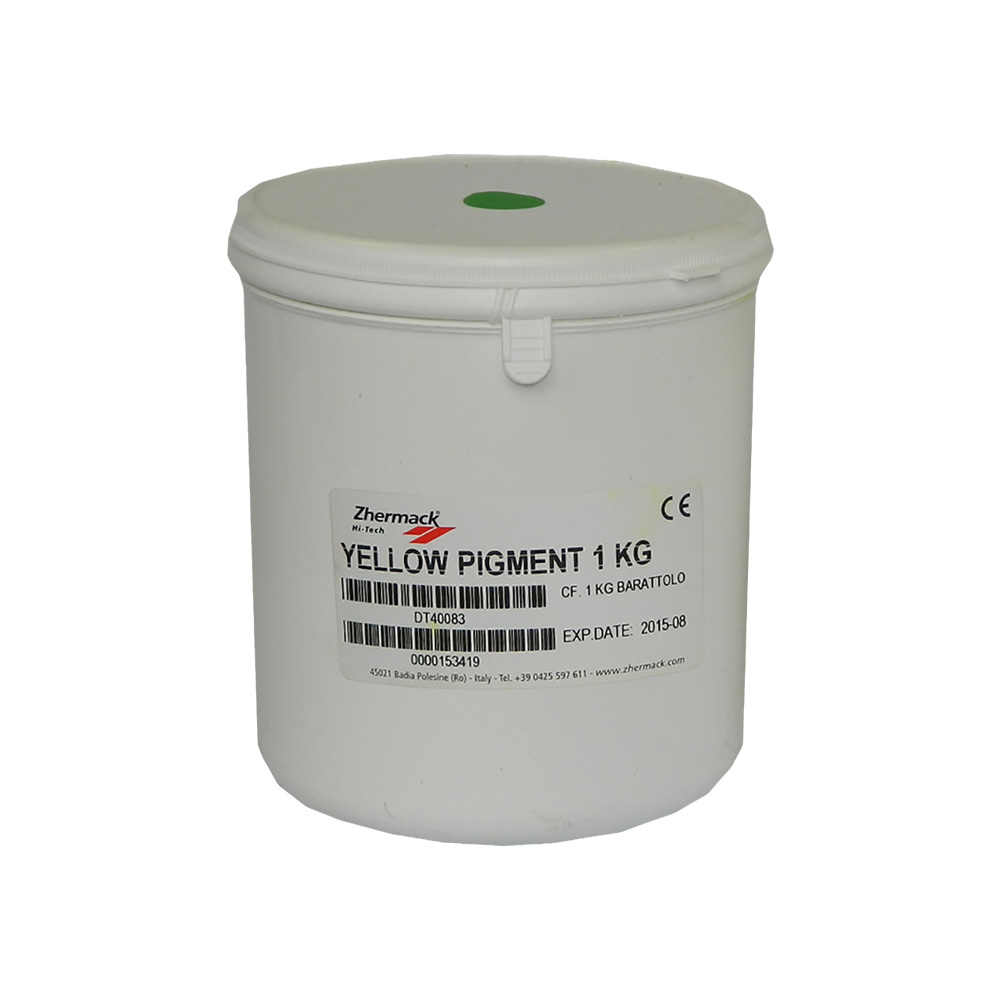
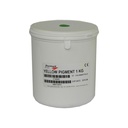
Zhermack pigments, 1 kg

4 sold 29054 views
No reviews yet Write a review

Pigment Zhermack pentru colorarea in masa a siliconului RTV. Ambalaj individual de 1 kg. Culori: Rosu, Galben, Negru, Alb, Albastru, Verde si Portocaliu.

AT A GLANCE

Explore the description, applications and recommendations for this product.

Read the full description
  • Culoare
  • Manufacturer
264.63 lei 264.63 lei

Pigment Zhermack for Coloring RTV Silicone - 1 kg

Pigment concentrate for mass coloring of RTV silicone

Zhermack silicone pigment is an auxiliary product used for the mass coloring of RTV silicone. The pigment is embedded in material before use, allowing a uniform colour to be obtained in the mass of Silicone.

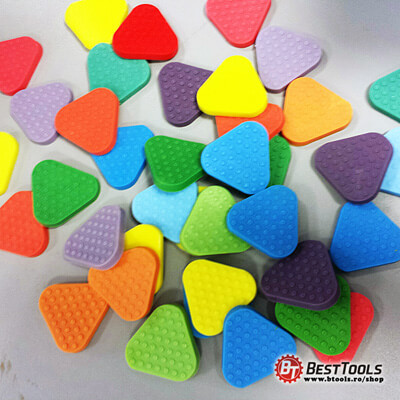
The product is available in several colors and can be used when the standard color of the silicone is not suitable for the application or when visual differentiation of the molds, layers or marks made of silicone is required.

Available colors

Zhermack technical documentation mentions the following variants:

  • Black / Black - Color Index PBK 7;
  • White / White - Color Index PW 6;
  • Red / Red - Color Index PR 254;
  • Blue / Blue - Color Index PB 15: 1;
  • Green / Green - Color Index PG 7;
  • Yellow / Yellow - Color Index PY 138;
  • Red-brown / Brownish Red - Color Index PR 101;
  • Orange / Orange.

Recommended applications

Pigment is used for mass coloring of the RTV silicone. In practice, pigmentation can be useful for:

  • obtaining a different color from the standard color of Silicone;
  • Visual differentiation of molds or silicone markers;
  • Getting a visual contrast the model or material used in the process;
  • easier identification of some moulds or components in a workshop or production process;
  • applications where the final colour of the silicone has a functional or aesthetic role.

Use with addition RTV2 silicone

For addition RTV2 silicone, pigment should be distributed and uniformly homogenised in the mass of the components prior to the preparation of the working sled.

In Best TOOLS practice, when it is necessary to obtain the same shades during a project, pigment is included separately in the amount of BASE And in quantity CATALYST necessary for the project. Each component homogenizes very well, after which the already pigmented materials weigh the successive working sarges.

Important: pigmentation does not alter the BASE ratio: CATALYST specified for RTV2 silicone. The mixing ratio indicated for the silicone used must continue to be observed when preparing each batch.

Silicone use RTV condensation

For condensing RTV systems, Best TOOLS pigment can be homogenized in the basic component prior to adding the tentor.

After obtaining a uniform colour in the base mass, prepare the working sands and add the intensifier respecting the dosage and instructions specific to the silicone condensation used.

Note: These incorporation procedures come from Best TOOLS practice experience. The supplied pigment technique does not describe a separate dosing procedure for addition and condensation systems.

Main characteristics

  • Product type: Silicone pigment / dye;
  • Use: mass coloring of RTV silicone;
  • Carrier: Siliconic polymer, according to color variant;
  • Packaging: 1 kg;
  • Available colors: black, white, red, blue, green, yellow, brown and orange red;
  • Dosage: The technical chart provided does not specify a standard percentage.

Information about pigments used

For black, white, red, blue, green, yellow and red-brown variants, Zhermack documentation provides information on Color Index, pigment density and resistance to light.

For the orange variant, the documentation indicates a carrier based on silicone polymer with methyl termination and specifies that the product is Lead and cadmium-free according to EEC Directive 2002 / 72.

Best TOOLS Recommendations

In silicone pigmentation, the objective is not to use as much pigment as possible, but to obtain color and intensity required with a uniform distribution.

First add a small amount, mix very well and evaluate the result. If the hue needs to be intensified, proceed progressively. This method provides better control than adding a large amount of pigment from the beginning.

If the project requires multiple injections or successive applications and it is important that they all have the same shadeWe recommend the pigmentation and homogenization from the beginning of the total amount of BASE and, separately, the total quantity of CATALYST required for the project.

The working sarges are subsequently weighed from already pigmented components, respecting the mixing ratio of the silicone. This method makes it possible to obtain a much more uniform colour between the successive sarges and avoids the need for repeated dosing of very small amounts of pigment.

For very large projects, where the subsequent reproduction of a color formula is necessary, weighing and documenting the amounts of pigment used can help to repeat as closely as possible in the following lots.

Useful complementary products:

  • addition of silicone RTV - for the production of pigmented moulds and markers;
  • Silicone RTV condensation - for applications in which this system is used;
  • precision scale - to prepare components and, where possible, control the amount of pigment;
  • mixed containers - for the preparation of the material,
  • Mixture spatula - to homogenise pigment in silicone.

Common questions about silicone pigments

Conclusion

Zhermack pigments for RTV silicone are auxiliary products designed for uniform mass coloring of silicone. The color range is available to adapt the visual appearance and contrast of the material to the desired application.

Since the available technical chart does not establish a universal percentage of dosing, pigmentation should be achieved by progressive addition and careful homogenisation. For projects processed in several sands, the prior pigmentation of the total quantities of components allows maintaining a uniform colour during the work, without the need for repeated dosing of the pigment in each sled.

Important limitations and recommendations

  • Available technical chart does not specify a standard percentage of pigmentation.
  • Do not use a predefined percentage by analogy with other pigmentation systems.
  • Add progressive pigment and completely homogenise before color evaluation.
  • For a new combination of silicone and pigment, first perform a test on a small amount.
  • Always follow the mixing ratio and instructions used RTV silicone.
  • For projects made in multiple sounges, avoid individual pigmentation after visual appreciation of each small sounge if it is necessary to maintain the same shade.

Frequently asked questions

What is silicone pigment?

Zhermack pigments are formulated in a Carrier based on silicone polymer. This formulation is intended to incorporate pigment into silicone, to obtain homogeneous colouring in the material's mass.

Pigmentation can be both aesthetic and practical. Different colors can help identify the moulds, differentiate some parts or obtain better visual contrast in certain work processes.

How much pigment is added to the silicone?

Zhermack's technical chart does not specify a standard percentage of pigment dosing. For this reason, we do not indicate a universal percentage that is not confirmed by the manufacturer.

The required amount depends on the desired colour intensity, the initial color of the silicone and the desired result.

In practice, pigment has a high colour power. For this reason, I recommend Progressive addition of a small amountfollowed by homogenization and colour check obtained. If a more intense colour is required, the quantity can be progressively adjusted.

Recommendation: for works where there is no previous experience with that combination of pigment and silicone, first run a test on a small amount of material.

Why is it important to mix the pigment?

The pigment must be evenly distributed in the material to obtain a more homogeneous colour in the mass of the silicone.

Since the pigment is concentrated, a relatively small amount can already produce intense colouring. Progressive addition allows better control over nuance and reduces the risk of adding from the beginning more pigment than necessary.

For projects made in multiple sands, the homogenization of pigment in the total amount of components prepared for the project helps keep the same shade from casting to casting.

How do you keep the same color between several sands?

When a project requires a higher amount of silicone, but the material must be prepared and poured into several successive sands, individual pigmentation is not recommended, after visual appreciation, of each small charge.

In Best TOOLS practice, for the addition RTV2 silicone we recommend pigmentation from the beginning of the total amount of BASE and, separately, the total amount of CATALYST necessary for the project. The two components pigment and mix separately until the desired result is obtained.

Subsequently, from BASE and CATALYST already pigmented are weighed the quantities required for each sled, respecting the mixture ratio of the silicone.

For example, if the process allows for sands of 300 g BASE + 300 g CATALYST, they can be prepared successively from already pigmented components. If the application allows larger sands, it can be done similar to the corresponding quantities, without again pigmentation each mixture.

This method helps to get a uniform colors throughout the project and avoid the difficulty of repeated dosing of very small amounts of pigment.

What's the pigment for silicone?

It is used for mass coloring of the RTV silicone and obtaining a different color than the original one of the material.

How much pigment should I use?

Zhermack technical chart provided does not indicate a standard dose percentage. The quantity is adjusted according to the desired colour intensity. Since the pigment is concentrated, we recommend progressive addition and conduct an initial test on a small amount.

How do I get the same shade when the silicone is applied or poured into multiple sands?

For a project that requires multiple successive charges, in Best TOOLS practice we recommend initial pigmentation of the total amount of BASE and, separately, the total quantity of CATALYST required for the projectup to the desired colour and uniform homogenization.

Subsequently, the already pigmented components weigh the quantities required for each sling, respecting the mixing ratio of the silicone. For example, 300 g BASE + 300 g CATALYST or larger quantities can be prepared successively depending on the working time and application requirements.

This method helps to maintain a uniform shade throughout the entire project and avoids repeated dosing of very small amounts of pigment in each working charge.

Important: BASE and CATALYST pigment and homogenise separately. After pigmentation, at the preparation of each batch, the mixture ratio used is still respected.

What if I need to reproduce the same shade in a future project?

For large enough quantities to allow reproducible dosing, weigh and document the amount of silicone and the amount of pigment used for the reference formula. This information can help to reproduce as closely as possible in a subsequent batch.

The pigment changes the silicone mixing ratio?

BASE ratio: CATALYST or base: tensile strength must be maintained according to the silicone specific instructions used. The pigment chart does not provide instructions to allow this ratio to be modified.

Can I mix different pigment colors?

Yeah, you can mix different colors to get some numbers. Current colors, black, white, red, blue, green, yellow, red-brown and orange, are basic colors, which by mixing allow for a wide spectrum of shades.

Is the pigment available in multiple colors?

Zhermack documentation mentions black, white, red, blue, green, yellow, brown and orange.

What is this product used for?

Use: Colouring silicone throughout the material.

Recenzii

Acest produs nu are inca recenzii.

Autentifica-te pentru a scrie o recenzie

Specifications

Culoare Alb, Albastru, Galben, Negru, Portocaliu, Rosu, Verde
Manufacturer Zhermack