Skip to Content
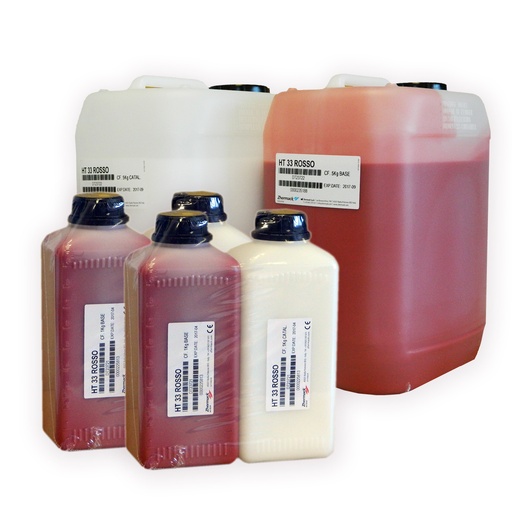
Product galleryChoose a photo for details
WATCH

See the product in use

Technical specifications

Base : catalyst ratio (by weight)100 : 100
Viscosity before mixing7,000–8,000 cP
Working time at 23 °C20–22 minutes
Curing time at 23 °C3 hours
Hardness after 24 hours33 ± 2 Shore A
Elongation at break430%
Dimensional change after 24 hoursmax. 0.05%

Specificatii

Manufacturer Zhermack
HELP FOR YOUR PROJECT

Ask a specialist

Tell us what you want to make, and we will help you choose the right material.

Talk to a specialist

Silicone liquid rubber RTV2 HT 33 Transparent Zhermack - addition silicone for moulds

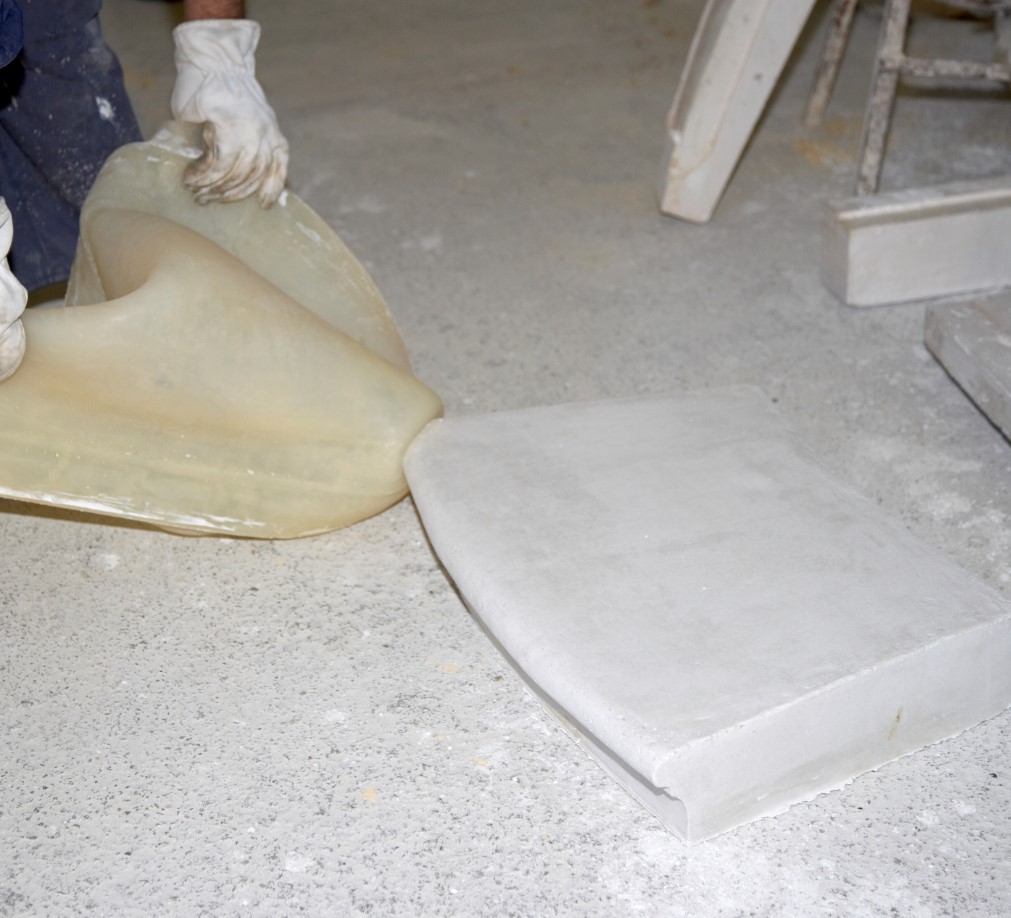
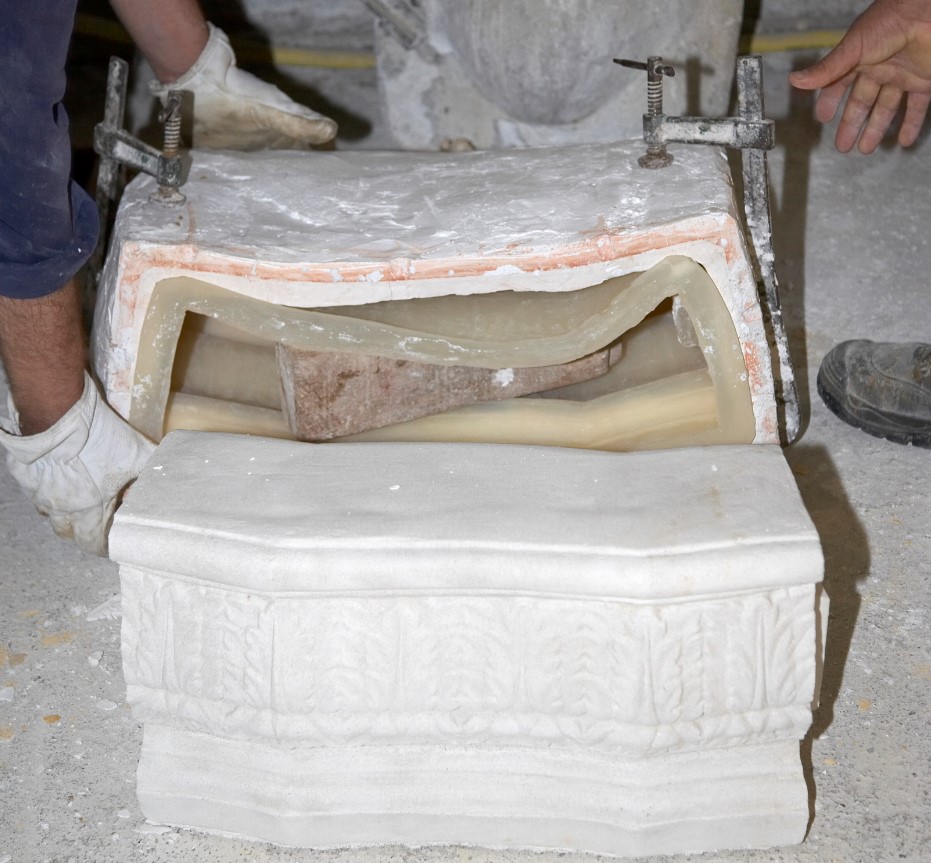
Clear RTV2 Silicone for flexible moulds and concrete casting

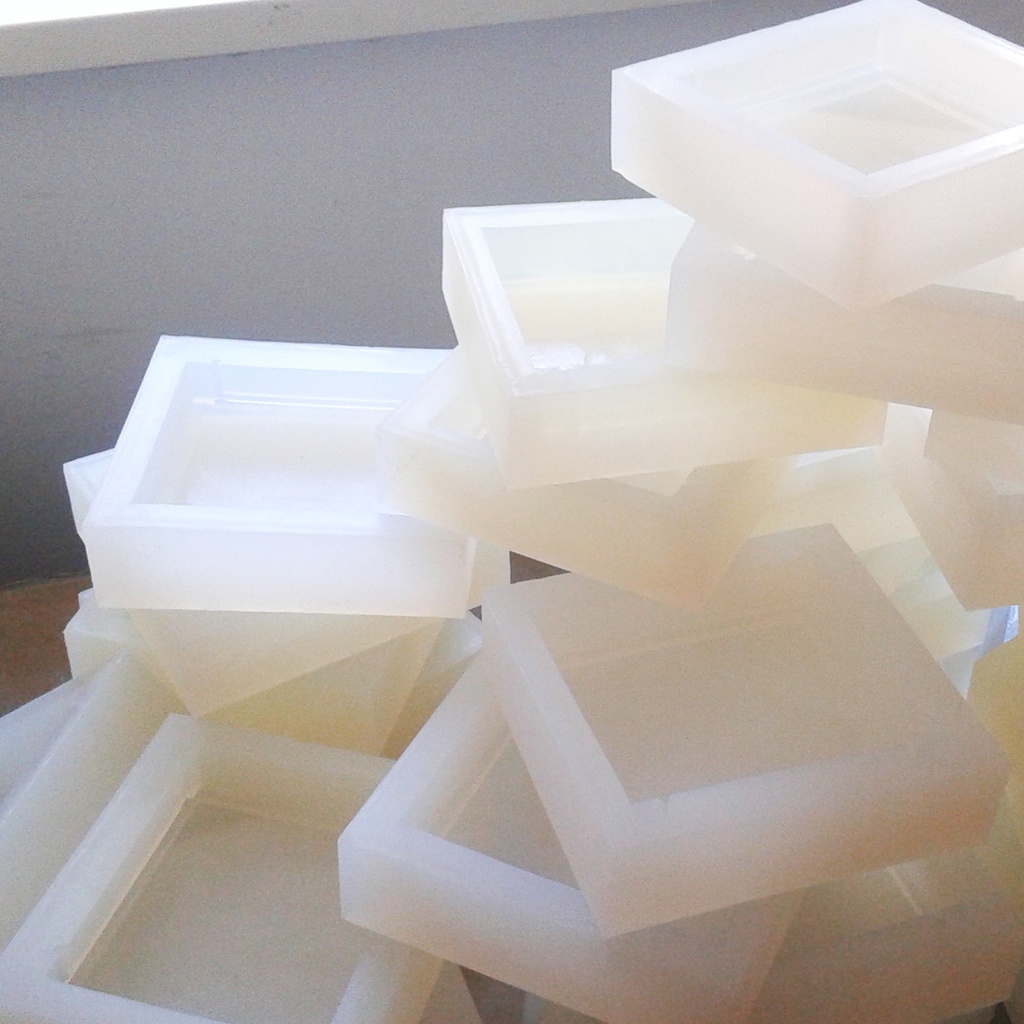
HT 33 Transparent Zhermack is a two-component silicone rubber RTV2 with vulcanization through addition, designed for flexible moulds. The system consists of two components, BASE and CATALYST, which are mixed in the ratio 1:1 And it vulcanizes at ambient temperature.

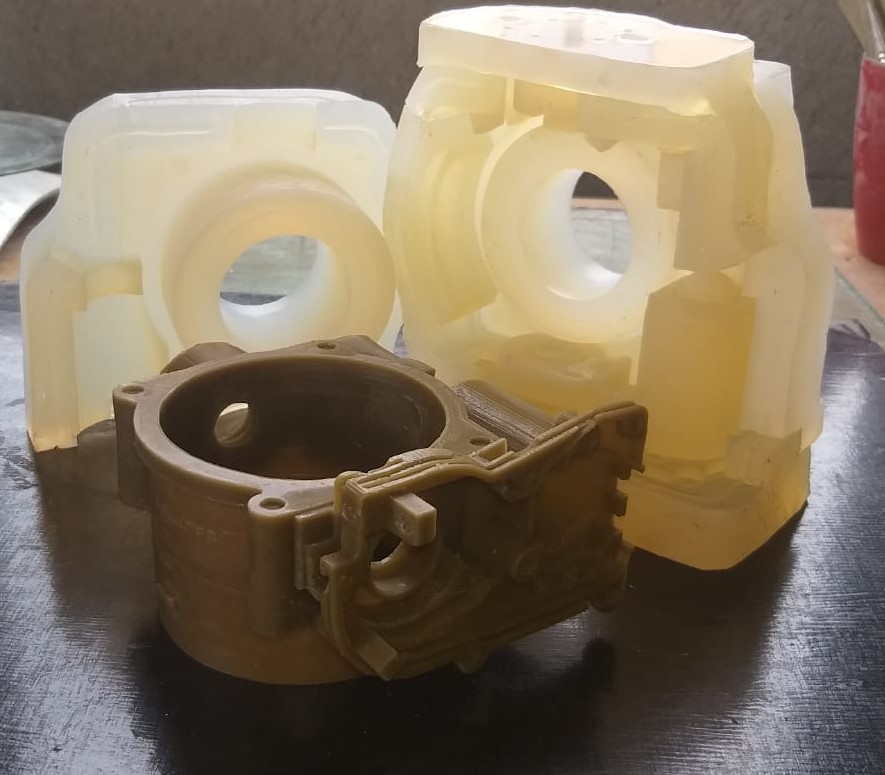
Silicone has a fluid consistency, is pourable and, after vulcanization, has a hardness of 33 Shore A. The combination of dimensional stability, reproduction accuracy and mechanical strength makes it suitable especially for moulds, artificial stone, concrete casting and jewellery applications.

Recommended applications

According to Zhermack technical documentation, HT 33 Transparent is recommended for:

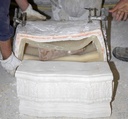
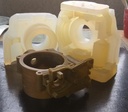
  • making flexible moulds;
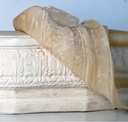
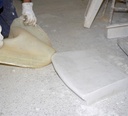
  • Concrete moulds and concrete castings;
  • artificial stone and decorative elements cast;
  • jewellerywhere the precision of reproduction and mechanical strength are important.

In concrete applications, HT 33 can be used for the production of molds for reproduction of elements such as reconstructed stone, decorative elements and other cast pieces, depending on the geometry of the model and the production process used.

Practical advantages of HT 33 Silicone Transparent

  • Simple mixing ratio 1: 1 - BASE and CATALYST weigh in equal amounts.
  • Fluid and pourable consistency - facilitates the distribution of material over the model and the penetration into its geometry.
  • hardness 33 Shore A - allows obtaining a flexible mould with a relatively robust consistency.
  • Good reproductive accuracy - the important feature for moulds and models with details.
  • Dimensional stability and durability - important properties for repeated use of a mould.
  • High mechanical strength - vulcanized silicone has a traction resistance of 5 N / mm ² and an elongation at break of 460%.
  • Wide range of temperature after vulcanisation - the properties of vulcanised silicone are guaranteed between -40 ° C and + 200 ° C

Main technical characteristics

  • Type: silicone RTV2 two-component, with added vulcanization
  • Appearance: translucent
  • BASE mixing ratio: CATALYST: 1:1
  • Density at 23 ° C: 1,09 g / cc
  • Vascosity of the mixture: 7500 cP
  • Working time / Pot Life at 23 ° C: 20 minutes
  • curing time at 23 ° C: 210 minutes
  • hard after 24 hours at 23 ° C: 33 Shore A
  • Traction resistance: 5 N / mm ²
  • Landing at break: 460%
  • Break resistance, Die B: 20 N / mm
  • Volcanised Silicone use temperature: -40 ° C to + 200 ° C

Important: Technical values are provided by the manufacturer as indicative values and should not be used for the development of specifications without checking the applicable technical documentation.

Working time and curing time

At standard temperature 23°C, HT 33 Transparent has a working time / Pot Life of about 20 minutes And a curing time about 210 minutescalculated from the beginning of mixing the two components.

Temperature directly influences these times. At temperatures above 23 ° C, working time and curing time shall be reduced. At temperatures below 23 ° C, both times increase considerably.

Completing a multi-step mould

If the prepared material is not sufficient to complete the mould, the first layer may be allowed to strengthen. Additional amount of HT 33 can be applied maximum 24 hours after the first layer has been cured. According to the manufacturer, the second layer adheres to the first without altering the final result.

Best TOOLS Recommendations

To achieve reproducible results, weigh the two components separately and respect ratio 1: 1. Resuspend BASE and CATALYST prior to dosing and use clean and dry containers.

For molds with many details or for works where air bubbles can affect the final surface, degassing under vacuum is recommended by the manufacturer.

Complementary products that can be useful in the process of making molds:

  • precision scale - for the correct dosage 1: 1 of the components,
  • mixed containers - for controlled preparation of silicone;
  • Mixture spatula - for mixing the components,
  • Vacuum equipment - to degas the mixture and reduce air bubbles;
  • Sulphur-free modeling plastic - for the preparation of certain models and the construction of the moulds, when the chosen process requires compatible plasticine.

Common questions about HT 33 Transparent

Conclusion

HT 33 Transparent Zhermack RTV2 is an addition-cure, pourable silicone with a hardness of 33 Shore A, designed to make flexible moulds. Simple mixing ratio 1: 1, fluidity, stability of mechanical properties and applicability for concrete moulds, artificial stone and jewellery recommend it for processes in which reproduction accuracy, mechanical strength and mould durability are important.

Preparation and use

Before dosing, both components should be shaken separately for a homogeneous mixture. BASE and CATALYST are then weighed in equal quantities, respecting the mixing ratio 1: 1.

The container used for mixing must be clean, dry and free of fat. The two components mix vigorously until a homogeneous material is obtained, ensuring that the material on the bottom and walls of the container is fully incorporated.

After mixing, the silicone can be poured over the model. Manufacturer recommends casting from a height of approximately 30 cm.

To reduce air bubbles, recommended release of the mixture under vacuum Before casting.

Important limitations and recommendations

  • Respect the exact mixing ratio 1:1 to maintain the final product characteristics.
  • Components BASE and CATALYST should be used together only if they have the same batch number.
  • Vaseline oil can inhibit vulcanisation. The manufacturer recommends a preliminary test.
  • The surfaces and containers that come into contact with the material must be clean, dry and fat-free.
  • It is recommended to degas under vacuum to remove air bubbles.
  • After curing, if necessary, compressed air may facilitate separation of the mould model.
  • Do not use tools to force the mould pattern separation.
  • Read the safety data sheet before handling the product.

Storage and term of validity

HT 33 Transparent has a term of validity stated by the manufacturer 18 months when properly stored at temperatures between 5 ° C and 27 ° C. The date of use of each batch shall be indicated on the product label.

After use, the containers should be properly closed. Do not reverse the caps of BASE and CATALYST containersto avoid contamination of components.

Preparation and application

  1. Mix the base and catalyst separately until uniform before weighing. The model must be clean, dry and free of grease; substances containing sulphur may inhibit curing.
  2. Weigh equal amounts: 100 parts base and 100 parts catalyst. Do not alter the catalyst quantity to speed up or slow down curing.
  3. Mix thoroughly until uniform, including the sides and bottom of the container. Avoid leaving any unmixed areas.
  4. Pour in a thin stream into one corner of the mould and allow the material to cover the model gradually. The data sheet recommends vacuum degassing to reduce bubbles.
  5. Observe the product-specific times and the temperatures at which they are specified. Demould after curing without forcing the mould or using sharp objects.
  6. Close containers tightly after use and do not swap the base and catalyst lids.

Consult the safety data sheet and batch label before use.

Frequently asked questions

What is HT 33 Transparent?

HT 33 Transparent is a addition, two-component and translucent RTV2 silicone. Both components have a declared density of 1,09 g / cc at 23 ° C and the mixture BASE + CATALYST has a viscosity of approximately 7500 cP.

After mixing the two components, the material remains fluid enough to pour over the model and fill the mould geometry. After vulcanization a flexible elastomer is obtained, with mechanical properties stable over time and good durability.

What is the mixing ratio for HT 33?

BASE and CATALYST mixed in the ratio 1:1In equal quantities.

How long can I work with silicone after mixing?

At 23 ° C, the working time / Pot Life indicated by the manufacturer is approximately 20 minutes. Environmental temperature influences this range.

How long before HT 33 gets stronger?

At 23 ° C, the indicated curing time is approximately 210 minutescalculated from the beginning of mixing.

How hard is Silicone after vulcanization?

After 24 hours at 23 ° C, the declared hardness is 33 Shore A.

Is degas recommended under vacuum?

Zhermack recommends using the vacuum to remove air bubbles from the mixture.

Can I then complete a mould if I haven't prepared enough silicone?

Yeah. According to the technical file, the additional quantity can be applied in maximum 24 hours after curing the first layerand the new material will adhere to it.

At what temperature can HT 33 be used after vulcanisation?

Volcanized Silicone properties are guaranteed by the manufacturer for temperatures between -40 ° C and + 200 ° C.

Does the workshop temperature affect working time?

Yeah. Over 23 ° C, working time and curing time are reduced. Less than 23 ° C, they grow.

What is the mixing ratio?

Base : catalyst ratio (by weight): 100 : 100.

How much working time is available?

Working time at 23 °C: 20–22 minutes.

How long does curing or demoulding take?

Curing time at 23 °C: 3 hours.

What is the material's hardness?

Hardness after 24 hours: 33 ± 2 Shore A.

Recenzii

5.0 / 5 5 reviews
Ionut Gradinaru

Am fost foarte multumit de produs. Si-a facut treaba excelent. Am mai comandat inca unul :-)

Adrian Junea

Este ok ușor de lucrat cu el calitate

Dragos Marchis

Un produs foarte bun, livrare rapida.

Borduz Florin

Un material foarte bun pentru aplicațiile pentru care a fost conceput.

MIRCEA FLORESCU

Super produs. bine ambalat si expediat. usor de lucrat cu el chiar si pentru lucruri pretentioase. se curata usor locurile in care mai atingi din greseala. recomand cu siguranta !

Autentifica-te pentru a scrie o recenzie

Specifications

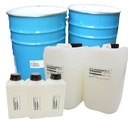
Ambalare (kg) 2 kg, 10 kg, 50 kg
Manufacturer Zhermack